
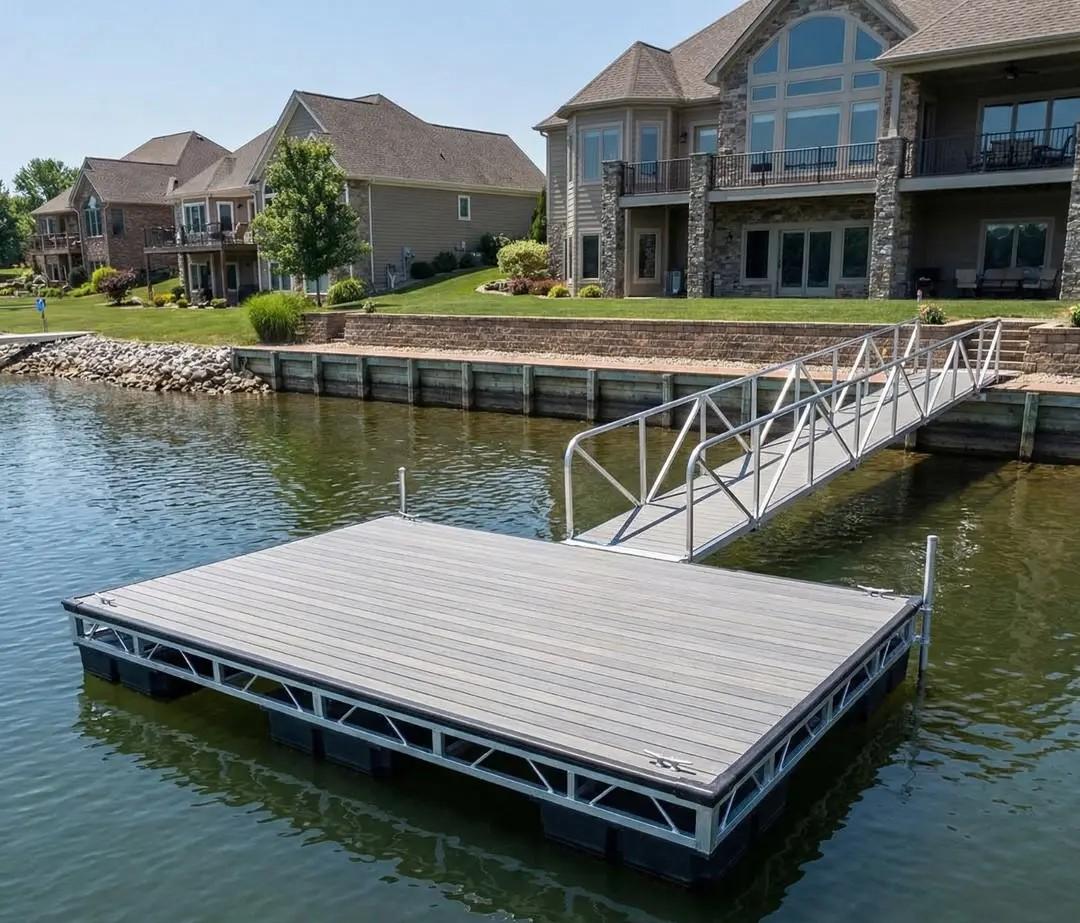
Choosing the right dock is an important decision for any waterfront property owner. Whether you have a private lakefront home, a river property, or a coastal waterfront, a well-designed dock can improve water access, support recreational activities, and make better use of your shoreline. However, changing water levels, wave conditions, boat sizes, and maintenance requirements all influence which dock system is most suitable.
Floating Aluminum Docks are a popular option because they combine lightweight construction, structural strength, and adaptability. They are available in different configurations to accommodate various waterfront conditions, from calm residential lakes to more exposed coastal areas. Understanding their features and comparing available designs can help you select a dock that meets your property's long-term needs.
1. Understand Your Waterfront Conditions
Before choosing a dock, evaluate the characteristics of your waterfront. Water depth, current strength, seasonal changes, and wave exposure all affect dock performance.
Consider these common waterfront environments:
- Lakefront Properties: Calm lakes with minimal current are generally suitable for standard single-frame floating docks. These provide convenient access for swimming, fishing, and recreational boating.
- River and Tidal Properties: Rivers and tidal areas may experience changing water levels and moderate currents. A gangway can help maintain convenient access between the shoreline and floating platform.
- Saltwater and Exposed Bays: Coastal properties often experience stronger waves, saltwater exposure, and heavier boat traffic. Reinforced double-truss construction may provide additional structural support in these environments.
Matching the dock design to local water conditions is one of the most important steps in choosing a suitable system.
2. Compare Different Dock Construction Types
Not every aluminum dock is designed for the same purpose. Understanding the available construction styles makes it easier to identify the right option.
Single Frame Floating Docks
Single-frame docks use a single-truss structural design and are generally suitable for calm to moderately exposed waterfronts. They are a practical choice for residential properties, including lake homes, protected rivers, and sheltered bays.
Their relatively straightforward construction makes them suitable for everyday activities such as swimming, fishing, and securing smaller recreational boats.
Double Truss Floating Docks
Double-truss docks feature additional structural reinforcement compared with standard single-frame designs. They are intended for applications involving heavier loads, larger boats, and more challenging water conditions.
For properties exposed to wave action, saltwater, or stronger environmental forces, a reinforced frame may offer additional structural stability. Express Docks offers this configuration for residential applications requiring heavier-duty construction.
Fixed Aluminum Docks
Although fixed docks are not floating systems, they are worth considering when comparing waterfront solutions. Fixed docks use pile-supported structures and are generally suitable for locations where water levels and depths remain relatively consistent.
The choice between floating and fixed construction depends largely on shoreline conditions and seasonal water-level changes.
3. Choose High-Quality Marine-Grade Aluminum
Material quality plays a significant role in dock durability and long-term maintenance. Marine environments expose dock structures to moisture, sunlight, temperature changes, and sometimes saltwater.
Look for docks constructed using 6061-T6 marine-grade aluminum. This aluminum alloy is known for its strength, durability, and corrosion resistance, making it suitable for many freshwater and saltwater applications.
Also examine the frame design, connection points, fasteners, and overall construction quality. Stainless steel hardware and properly engineered structural connections can contribute to the dock's long-term performance.
A well-designed aluminum frame should balance strength, weight, and resistance to environmental exposure.
4. Consider Decking Materials and Available Features
The decking surface affects comfort, appearance, and maintenance requirements. Many residential aluminum dock systems use wood-plastic composite (WPC) decking because it combines a natural appearance with practical outdoor performance.
When comparing decking options, consider:
- Slip resistance and surface texture.
- Resistance to moisture and UV exposure.
- Maintenance and cleaning requirements.
- Color choices and overall appearance.
- Compatibility with the dock's frame.
Express Docks offers WPC composite decking in six colors: Teak, Walnut, Charcoal, Driftwood, Espresso, and Gray. Trex® decking is also available upon request.
Additional features, such as gangways, cleats, ladders, and boat-access accessories, can make a dock more functional for everyday waterfront use.
5. Select the Right Dock Size and Configuration
Dock dimensions should reflect how you intend to use the space. A small platform may be sufficient for swimming or fishing, while larger waterfront properties may require additional sections for boat access, seating, or multiple watercraft.
Before finalizing the design, consider:
- The number and size of boats you plan to accommodate.
- Available shoreline space and water depth.
- Expected passenger and equipment loads.
- Access requirements during changing water levels.
- Future expansion possibilities.
Modular dock systems can be particularly useful because their sections can be configured to suit different layouts. Custom engineering also helps ensure that dimensions and structural specifications match the property's requirements.
6. Evaluate Installation, Shipping, and Warranty
Installation requirements are another important consideration. Some aluminum floating dock systems are designed as modular sections that can be transported by standard freight and assembled near the waterfront.
Express Docks provides custom engineering and 3D dock designs, with an initial design turnaround of approximately 48 hours. Its residential systems are factory-assembled and photo-documented before being disassembled for palletized shipping. Most residential configurations can be assembled by two people using basic hand tools, although larger installations may require professional assistance.
Warranty coverage should also be reviewed carefully. Express Docks offers a 50-year warranty on its residential aluminum dock frames. Buyers should check the specific warranty terms, coverage limitations, and maintenance responsibilities before purchasing.
Remember that anchoring systems, permits, and installation labor may be separate considerations. Local regulations and waterfront conditions can influence the requirements.
7. Compare Your Budget and Long-Term Value
The initial purchase price is only one part of the overall investment. Shipping, anchoring, accessories, decking, permits, and installation can affect the final cost.
For reference, Express Docks lists the following residential starting prices:
- Single Frame Dock: $60 per square foot.
- Double Truss Dock: $75 per square foot.
- Fixed Dock: $60 per square foot.
These prices provide a starting point, but the final estimate depends on dock dimensions, configuration, accessories, and site requirements.
Comparing material quality, structural design, warranty coverage, and expected maintenance can help you evaluate the overall value rather than focusing only on the initial price.
Conclusion
Choosing the right dock requires careful consideration of waterfront conditions, construction materials, structural design, decking, dimensions, and installation requirements. Floating aluminum docks offer a flexible solution for many residential waterfronts, but the best configuration depends on the property's specific needs.
By comparing single-frame and double-truss designs, evaluating marine-grade materials, and planning for long-term use, property owners can make a more informed investment. For customized residential dock solutions, Express Docks offers engineered aluminum systems designed for different waterfront environments.
Frequently Asked Questions
1. Are floating aluminum docks suitable for freshwater and saltwater?
Yes. Marine-grade aluminum, such as 6061-T6, offers corrosion resistance in freshwater and saltwater environments. For exposed coastal locations, reinforced construction may be more appropriate.
2. What is the difference between single-frame and double-truss docks?
Single-frame docks are generally designed for calm to moderately exposed waterfronts. Double-truss docks provide additional structural reinforcement for heavier loads, larger boats, and more challenging conditions.
3. How long does it take to receive a custom aluminum dock?
Design engineering can take approximately 48 hours. Production and shipping typically require 6–10 weeks, depending on the configuration and delivery location.
4. Can floating aluminum docks be assembled without a contractor?
Many modular residential systems are designed for assembly using basic hand tools. However, larger installations, complex anchoring, and challenging waterfront conditions may require professional assistance.
5. Can a gangway be added to a floating dock?
Yes. A gangway can connect the shoreline to the floating platform and accommodate changing elevations caused by tides or fluctuating water levels.