

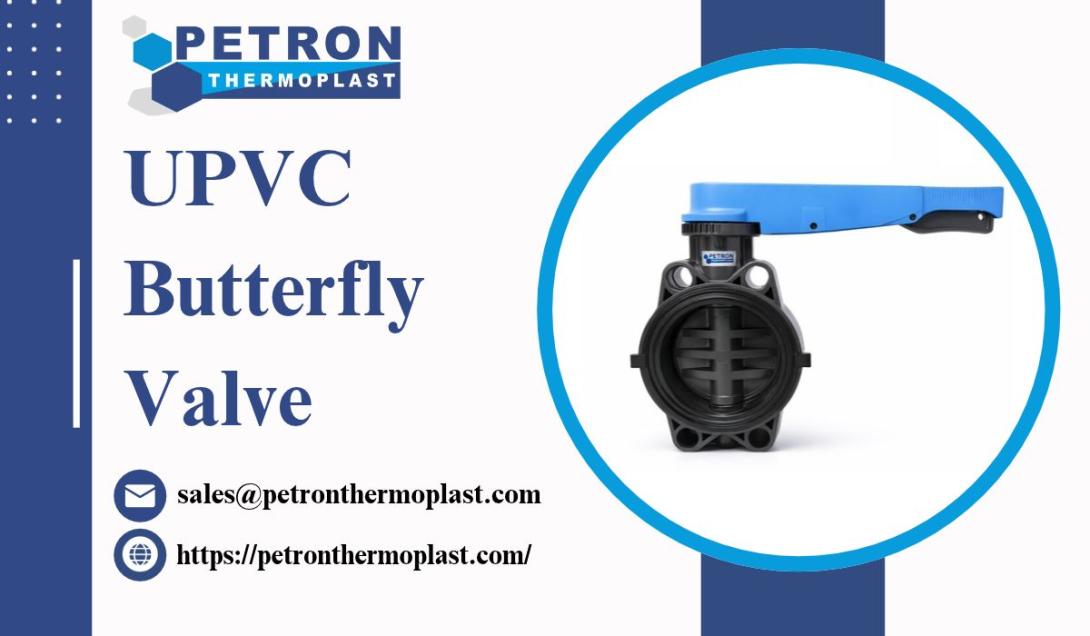
Efficient fluid regulation is essential for maintaining reliable performance in industrial piping systems. A suitable UPVC Butterfly Valve helps control the movement of water, chemicals and other compatible fluids through pipelines. Its compact construction, lightweight design and corrosion-resistant material make it a practical option for many industrial applications. Industries looking for dependable flow control often consider UPVC butterfly valves for water treatment plants, chemical processing facilities and industrial utility networks.
Petron Thermoplast offers industrial UPVC valve solutions for different piping requirements. With attention to material selection, connection arrangements and project specifications, customers can explore suitable valve options for customized installations and bulk industrial requirements.
What Is a UPVC Butterfly Valve?
A UPVC butterfly valve is a quarter-turn valve used to regulate or isolate fluid flow in a pipeline. It contains a circular disc positioned inside the valve body. When the operating handle or actuator turns the stem, the disc rotates to control the passage of fluid. UPVC stands for unplasticized polyvinyl chloride. This thermoplastic material is widely used in industrial piping because of its corrosion resistance, low weight and ease of installation.
Butterfly valves are particularly useful in pipeline networks where space, weight and convenient operation are important considerations. The correct valve selection depends on the fluid, operating pressure, temperature and installation conditions.
How Does a UPVC Butterfly Valve Work?
The operating mechanism is based on a quarter-turn movement. The disc rotates around its central shaft to change the flow passage.
The valve generally works in three operating positions:
- Open position: The disc is aligned with the direction of flow, allowing fluid to pass through the pipeline.
- Partially open position: The disc is rotated to restrict the flow passage and regulate flow.
- Closed position: The disc is turned across the pipeline to stop flow.
Key Features of Industrial UPVC Butterfly Valves
Industrial UPVC butterfly valves offer several useful characteristics for compatible applications.
1. Corrosion Resistance
UPVC provides resistance to many chemicals and corrosive environments. This makes it suitable for selected industrial fluid-handling systems. However, compatibility should always be checked against the exact chemical, concentration and operating temperature.
2. Lightweight Construction
Compared with many metallic valve alternatives, UPVC butterfly valves are lightweight. This can simplify handling, transportation and installation.
3. Compact Design
The butterfly valve design generally requires less installation space than some other valve arrangements. It can be useful in compact piping layouts and industrial utility networks.
4. Convenient Operation
Quarter-turn operation allows the valve to move between open and closed positions with a short rotational movement. Manual and actuator-operated configurations may be selected according to the project.
5. Low Maintenance Requirements
The non-metallic construction can reduce concerns associated with metallic corrosion. Regular inspection is still important to check the disc, stem, sealing components and operating mechanism.
Applications of UPVC Butterfly Valves
UPVC butterfly valves are used in several industries where compatible non-metallic flow-control equipment is required.
Water Treatment Plants
Water treatment facilities use valves to control water movement through filtration, treatment and distribution lines. UPVC butterfly valves may be considered for compatible water-handling applications.
Chemical Processing Industries
Chemical plants require suitable materials for handling different process fluids. UPVC valves can be evaluated for selected chemical transfer and circulation lines after checking chemical compatibility.
Wastewater Treatment Facilities
Wastewater systems involve different treatment stages and pipeline arrangements. Suitable UPVC butterfly valves can help isolate sections of compatible piping networks for operation and maintenance.
Industrial Utility Networks
Manufacturing plants use utility pipelines for water circulation and other compatible fluids. Compact butterfly valves can support flow isolation in these systems.
Electroplating and Surface Treatment
Electroplating and surface treatment facilities often handle process chemicals and treatment solutions. Valve material and seal compatibility must be verified before selecting UPVC equipment for these installations.
Benefits of Using UPVC Butterfly Valves in Industrial Pipelines
Selecting an appropriate UPVC butterfly valve can provide practical benefits for industrial piping projects.
- Corrosion-resistant material: Suitable for many compatible fluid-handling environments.
- Space-efficient installation: Compact valve construction supports different pipeline layouts.
- Easy handling: Lightweight construction can simplify installation work.
- Quick operation: Quarter-turn movement supports convenient opening and closing.
- Flexible configurations: Different operating and connection arrangements may be available.
- Industrial versatility: Can be considered for water treatment, chemical processing and utility applications.
How to Choose the Best UPVC Butterfly Valve?
Before purchasing a UPVC butterfly valve, consider the following factors to identify a suitable option for your installation.
1. Identify the Fluid: Confirm whether the valve will handle water, chemicals or another industrial fluid. Check material compatibility before ordering.
2. Check Pipeline Size: Select the valve according to the actual pipeline diameter and connection arrangement.
3. Review Pressure and Temperature: Confirm that the valve's rated operating limits match the system requirements.
4. Select the Operating Mechanism: Manual valves may suit straightforward installations, while actuator-operated valves can be considered for automated systems.
5. Verify Sealing Material: The seat and sealing components must be suitable for the fluid and operating environment.
6. Confirm Installation Requirements: Check flange dimensions, face-to-face dimensions, clearance and supporting pipeline arrangements.
7. Consider Future Maintenance: Ensure that the valve can be accessed for inspection and servicing.
Customized UPVC Butterfly Valve Solutions by Petron Thermoplast
Petron Thermoplast focuses on industrial thermoplastic piping products and customized requirements. Businesses planning new pipeline installations or upgrading existing systems can discuss their UPVC butterfly valve requirements with the company.
For project-based enquiries, buyers can share the following details:
- Required valve size and quantity
- Pipeline material and connection type
- Fluid or chemical name
- Operating pressure and temperature
- Manual or automated operation preference
- Installation drawings or technical specifications
- Project delivery location
Conclusion
A suitable UPVC butterfly valve can support efficient fluid regulation and pipeline isolation in compatible industrial applications. Its lightweight construction, corrosion resistance and compact design make it a useful option for selected water treatment, chemical processing and industrial utility systems.
However, correct selection is essential for reliable operation. Pipeline size, pressure, temperature, chemical compatibility and sealing materials should all be evaluated before purchase. Petron Thermoplast offers industrial UPVC valve solutions for businesses seeking suitable products for customized piping installations and bulk project requirements. Contact the company to discuss your technical specifications and project needs.